Real Electro Drum Pad: Hip Hop
- 4.6
- Rating
- 10.00M
- Installs
- Free
- Price
 Analysis by App-foxy
I usually know within a few days whether a music game is more than a novelty. With Real Electro Drum Pad: Hip Hop, the first impression is easy to understand: it turns an Android phone or tablet into a compact electronic drum pad, so tapping the screen produces drum sounds without asking me to learn a full instrument first. That makes it immediately approachable, especially when I want a quick rhythm break rather than a serious practice session.
After spending more time with it, my opinion is more measured. The app is enjoyable when I treat it as a casual rhythm toy, a way to experiment with beats, or a small creative outlet during an otherwise dull moment. It is less convincing as a replacement for a physical pad controller, a structured drum-learning program, or a complete music-production workstation. Its lasting value depends heavily on how much I enjoy making my own short sessions instead of waiting for a deep progression system to keep me engaged.
What the first week feels like
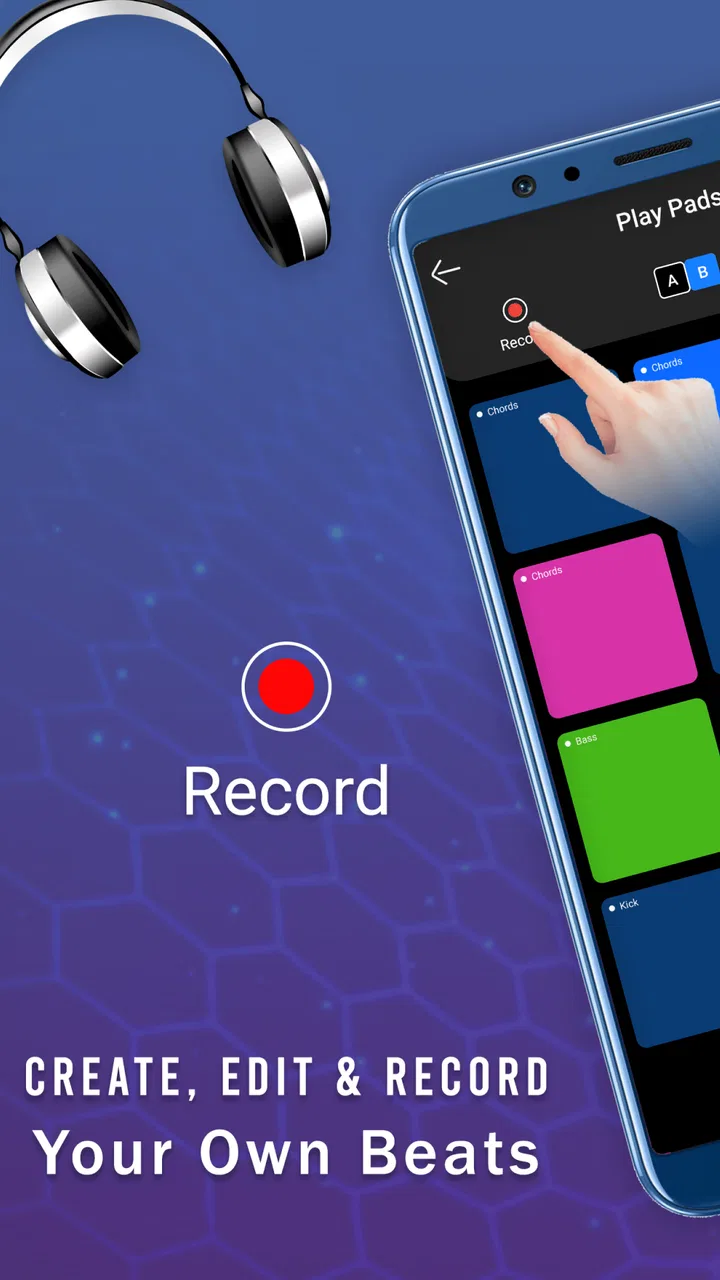
My first week with the game would be built around quick experiments. I can open it, place the phone on a stable surface, and start tapping different areas of the pad. That low barrier is the central appeal. There is no need to connect hardware, arrange a kit, or spend time learning a complicated interface before hearing something. For a beginner, the screen layout makes the idea of electronic drumming feel less intimidating.
You May Also Like

 Blood Strike: 2.5 Anniversary
Blood Strike’s Loadouts Turn Every Drop Into a Tactical Gamble
A close look at Blood Strike’s custom loadouts: how fast access to signature weapons reshapes its battle royale rhythm, rewards preparation, and narrows the gap between fights.

 Pandora - Music & Podcasts
Pandora’s Music Is Easy to Start, but Harder to Recover
Pandora’s strength is its low-effort path from a seed to a station. Its weak spot is how much confidence it asks you to place in connection, setup, and quiet recovery.

 8 Ball Pool
 Is Built on Rivalries, Rematches, and Routine
A close look at the rivalries, rematches, shared routines, and unanswered safety questions that turn a quick pool match into a persistent mobile community.

 Samsung Music
’s Quiet Strength Is Playing What You Already Own
Its reach comes less from spectacle than from dependable access to a personal library. That simplicity is both the app’s strongest retention engine and its ceiling.

 AccuWeather: Weather Radar
AccuWeather Review: A Quick, Clear Forecast for Everyday Decisions
For everyday plans, the best forecast is the one you can understand quickly. AccuWeather makes rain timing, radar, and local conditions easy to act on, with a few trade-offs.

 Hill Climb Racing
Why Hill Climb Racing Still Turns Crashes Into One More Run
A tiny car, a bumpy hill and one more upgrade: Hill Climb Racing keeps resurfacing because its simple chaos makes every near-miss feel personal.
More From Our News Desk
View All News


The Hip Hop focus also gives the experience a clear personality. I approach it less like a traditional drum lesson and more like a beat-making playground. A few minutes can be enough to test a basic pattern, imitate a rhythm I have heard, or simply combine sounds until something feels satisfying. This is a good fit for someone who wants to understand timing through playful repetition rather than formal notation.
One practical tip makes a noticeable difference: I would use a tablet or the largest comfortable screen available when possible. On a small phone, my fingers can cover nearby pads, and fast patterns become less comfortable. A larger display gives each tap more room and makes it easier to watch my hands while I play. That does not transform the game into professional hardware, but it reduces accidental touches and makes longer sessions less tiring.
I also recommend starting with deliberate, separated taps instead of immediately trying to play quickly. The first few minutes are more useful when I learn where each sound sits and how much finger movement is needed. Once that layout becomes familiar, I can try alternating hands or repeating a simple two-part rhythm. This approach exposes whether I enjoy the actual interaction, rather than confusing the initial novelty with genuine interest.
The game is free to download, which makes that trial easy. It carries an Everyone age rating, so it is suitable for a broad audience, including younger users who are curious about rhythm. I would still treat it as entertainment rather than a complete educational tool. A child can explore timing and coordination through it, but anyone looking for a carefully sequenced curriculum will probably need a dedicated learning app or an instructor as well.
During an ordinary day, I can imagine using it while waiting for a friend, taking a short break from studying, or relaxing before bed. The strongest everyday scenario is not a long performance. It is a five-minute session in which I create a simple beat, try to improve its consistency, and close the app before it becomes a chore. That short-session design is where the game feels most natural.
Who gets the most from the novelty
Beginners are the obvious audience, but not the only one. Someone who already enjoys hip-hop rhythms may like having a pocket-sized surface for spontaneous tapping. A songwriter could use it to think through a rough rhythmic idea before opening a more advanced music tool. Even an experienced drummer might use it as a casual finger exercise, although the phone screen cannot offer the rebound, spacing, or physical response of real pads.
The game is also a reasonable choice for people who are curious about beat pads but do not yet know whether buying equipment makes sense. It lets me test whether I enjoy arranging sounds with my fingers before spending money on a controller. That is a useful role, even if the app eventually points me toward hardware rather than replacing it.
On the other hand, I would skip it if my main goal were accurate drumming technique, realistic acoustic-kit practice, or detailed recording. A touchscreen cannot reproduce the feel of sticks, pedal control, dynamic pad response, or the physical separation of a real kit. For those needs, a hardware controller or a dedicated drum-learning solution is the better investment.
Where it sits beside familiar alternatives
Compared with a metronome, this game is more playful but less focused. A metronome is better when I need precise tempo practice and nothing else. Compared with a music-production app, it is quicker to approach but much narrower as a creative environment. A full production app usually offers broader arrangement and editing possibilities, while this game wins when I want immediate tapping without building an entire project.
It also differs from rhythm games that judge notes against a fixed track. Those games often provide a clear challenge, score, and sense of progression. Here, the attraction is the direct act of triggering drum sounds. That freedom can feel refreshing, but it also means I have to supply my own goals. If I need constant objectives, unlocks, or competitive feedback, a more structured rhythm game may hold my attention longer.
What remains useful after the first month
The important question is whether I still have a reason to open it after the first week. For me, the answer depends on whether I turn it into a small habit. The app does not automatically create a practice routine in my head. I have to decide what each session is for: repeating a rhythm, testing a variation, warming up my fingers, or sketching an idea. Without that intention, the experience can become a sequence of random taps that feels entertaining once but not memorable later.
A simple monthly routine would be to choose one narrow goal per session. One day I might work on keeping a steady pulse. Another day I might alternate between two pads without speeding up. Later, I could try to make a short pattern feel less repetitive by changing one element at a time. These exercises are modest, but they give the game recurring value because I am measuring my own control rather than expecting the app to provide endless content.
That is one of the more useful insights I took from the experience: the game works better as a self-directed rhythm sketchpad than as a conventional game with a finish line. I get more from it when I bring a musical question to the session. “Can I keep this pattern even?” is more rewarding than “What can I tap next?”
It can also fit into a creative workflow. If a beat idea appears while I am away from my computer, I can use the phone to explore its basic pulse. I would not expect the app alone to become the final production environment, but it can help me decide whether an idea has energy before I recreate it elsewhere. This makes it more valuable to hobbyist musicians than to someone who only wants a one-time novelty.
Another practical use is informal group play. A friend can try a pattern, I can imitate it, and we can compare how different hand movements change the feel. That kind of interaction is more engaging than playing alone, particularly for children or families. It also reveals a limitation: the experience is strongest when everyone accepts that it is a simple shared activity, not a substitute for a full jam setup.
The developer, Beat Blend Labs, has given the game a broad enough premise to attract casual users, and its reach reflects that accessibility. It has passed ten million installs and holds a 4.5 average from around twenty-nine thousand ratings. Those figures suggest that the basic concept connects with many people, but they do not guarantee that every user will find lasting depth. A high initial appeal can coexist with a short personal lifespan, especially in a game built around quick experimentation.
How I would keep the habit from becoming stale
I would avoid playing it for an hour every day. That sounds counterintuitive, but the app benefits from being a compact activity. Short, purposeful sessions preserve the feeling of discovery. If I overuse it in the first few days, I am more likely to exhaust the available novelty before I have found a personal reason to return.
I would also switch between listening and playing. First I might tap a pattern without trying to make it impressive. Then I would pause and ask whether the rhythm has a clear pulse, whether my hands are rushing, and whether the pattern has a beginning and an ending. This turns casual play into basic musical observation. It is not a formal lesson, but it gives each session a little more substance.
For people who want to make beats, a useful workflow is to keep a small note on the phone with descriptions of patterns rather than relying on memory. I can write something like “steady kick feel with a late accent” and try to rebuild it later. The game becomes a place for testing ideas, while the note provides continuity between sessions. That is a simple workaround for the fact that casual tapping can disappear as soon as I close the app.
I would not assume that every pattern I create will translate perfectly to physical drums or another music app. Finger taps are forgiving in some ways and misleading in others. The screen encourages compact movements, while real equipment involves different spacing and physical force. Treating the game as a sketching surface keeps expectations realistic and prevents it from teaching habits that I might later need to unlearn.
Maintenance, friction, and the reasons I might stop
Although there is no instrument to tune or cables to organize, the app still has a small maintenance burden. I need to keep the phone positioned securely, make sure my fingers are not obscuring neighboring areas, and pay attention to whether my device is comfortable for repeated tapping. These details sound minor, but they influence whether I return for a second session or close the game after a few frustrating minutes.
Touchscreen play is also sensitive to context. A crowded phone screen, an awkward grip, or a surface that makes the device slide can interrupt the rhythm. I prefer placing the device flat and using light, controlled taps. Holding it in one hand while playing with the other may be convenient, but it reduces stability and makes quick patterns harder to repeat consistently.
Another source of friction is the gap between the phrase “real drum” and what a phone can physically deliver. The sounds may give me the impression of an electronic kit, but the screen cannot provide tactile feedback. I do not feel a pad compress or rebound under my finger. That matters when I am trying to improve precision, because I receive less physical information than I would from even a basic controller.
There is also the question of monetization. The game is free, while individual in-app purchases range from ninety-nine cents to ninety-nine dollars and ninety-nine cents. That range is worth noticing before spending. I would begin with the free experience and only consider a purchase if I had already established a regular use for the app. Paying early to preserve excitement is risky when the core appeal may fade after the first few sessions.
For a family device, I would make sure the person using it understands that optional purchases can exist. The Everyone rating makes the game broadly accessible, but age suitability and spending decisions are separate matters. I would not hand over a payment-enabled device without checking its purchase controls first. That is ordinary digital housekeeping, yet it is especially relevant for a casual game that children may explore out of curiosity.
The current version is 11.0.2, and the game requires Android 8.0 or later. That makes compatibility straightforward for many Android users, but I would still check the device before planning to use it on an older phone or tablet. A game that depends on quick touch response is not enjoyable if the hardware itself feels slow or cramped. The device experience matters almost as much as the software here.
What causes fatigue over time
The biggest fatigue point is repetition without a personal challenge. Tapping the same small collection of sounds can be satisfying at first, but the novelty declines when every session feels identical. The app cannot solve that entirely for me. I have to vary the purpose, involve another person, or move an interesting idea into a richer music tool.
Another issue is the absence of physical depth. A real pad controller gives me a different relationship with rhythm because I can feel the surface and develop muscle memory around it. The phone offers convenience, but convenience can make the experience feel disposable. I may enjoy it while it is open and then forget it exists once another form of entertainment appears.
I also think advanced musicians may outgrow it quickly. The game is useful for rough ideas and casual practice, but it is not where I would expect to manage a serious arrangement or refine a finished track. Someone who already owns a controller, a digital audio workstation, or a structured drum course will likely find those alternatives more rewarding for sustained work.
That does not make the game unsuccessful. It simply defines the right expectation. Its strength is immediacy, not depth; its best recurring use is a short creative prompt, not a complete musical ecosystem. Once I accept that boundary, the limitations feel honest rather than disappointing.
My long-term verdict
After the novelty fades, I would keep Real Electro Drum Pad: Hip Hop installed if I wanted a lightweight rhythm tool that I could open without preparation. It earns that space through accessibility, quick feedback, and the freedom to create small patterns whenever inspiration appears. I especially recommend it to beginners, curious non-musicians, and casual players who enjoy making their own goals.
I would not recommend it as the only app for someone serious about learning drums. A metronome is more precise for timing drills, a full music-production app is more capable for arranging and saving ideas, and physical hardware is far better for touch and technique. The game is best understood as the step before those tools, or as a convenient companion to them.
Its free entry makes trying it sensible, while the optional purchase range means I would delay spending until the habit proves itself. If I am still opening it after several weeks to test patterns, warm up, or capture rhythm ideas, then it has found a useful role. If I only return because the first tap felt amusing, I would let it go without feeling that I had missed a major instrument.
In the end, the game earns lasting value through the user’s routine rather than through endless novelty. I like it most when I give each session a small purpose and keep expectations grounded. For a quick electronic drum-pad experience on Android, it is approachable and enjoyable. For deep musical development, I would move on to a more specialized alternative once the screen stops feeling new.
FAQs for Real Electro Drum Pad: Hip Hop
01What is Real Electro Drum Pad: Hip Hop?
Real Electro Drum Pad: Hip Hop is a dynamic music app designed for aspiring DJs and music producers. It allows users to create and mix hip hop beats using an intuitive interface with a variety of sound packs and effects. The app is suitable for both beginners and experienced users looking to experiment with music production.
02How user-friendly is the app for beginners?
The app is very user-friendly, featuring an intuitive interface that guides users through the process of creating beats. It offers tutorials and pre-set sound packs that make it easy for beginners to start making music without needing extensive knowledge of music production. The layout is simple, ensuring a smooth learning curve.
03What features does the app offer for advanced users?
For advanced users, Real Electro Drum Pad: Hip Hop provides a range of customizable features, including advanced sound modulation options and a variety of high-quality sound packs. Users can layer different sounds, apply effects, and save their creations for further editing or sharing. The app supports MIDI controllers, enhancing its versatility.
04Does the app require an internet connection?
The app can function offline, allowing users to create and mix beats without an internet connection. However, an internet connection is needed to download additional sound packs and updates. Users can enjoy creating music on-the-go without worrying about connectivity issues, making it highly portable.
05Are there any in-app purchases or ads?
Real Electro Drum Pad: Hip Hop offers in-app purchases, allowing users to buy additional sound packs and features. While the basic version is free, users may encounter ads. These purchases and ads support the development of the app, ensuring continuous updates and enhancements for a better user experience.
Pros
- Intuitive interface for easy beat making.
- Vast library of high-quality sound packs.
- Customizable pads for personalized setups.
- Supports multi-touch for complex rhythms.
- Offline mode available for on-the-go use.
Cons
- Limited export options for completed tracks.
- In-app ads can disrupt the creative flow.
- Requires premium for full sound library.
- Occasional latency on older devices.
- Lacks advanced editing features for pros.

Real Electro Drum Pad: Hip Hop
Gallery